What Do You Want to Take into 2026?

This time next week we will be in a new year, which often lends itself to setting goals and resetting our priorities. I would like to offer a second approach which involves using the next few days for reflection, rather than immediately determining what needs to be different about 2026.

I let go of rigid New Year’s resolutions years ago. It might have been because I lost momentum after a few months, or sometimes the goals were short-term and once accomplished, I lost interest. Over time, I realized I was more motivated by examining a few core values and using those as a basis for how I lived, rather than deadlines or goals to meet. Progress and practice, not perfection.

For example, the fitness goals – building strength and flexibility and losing weight, eating healthy, and prioritizing sleep and rest. Nothing wrong with these as goals, I thought I only needed to set metrics to measure success. But what if instead I accepted that these goals were the foundation of my approach to physical well-being, incorporated them into my daily rhythm, and treated them as core values? One less resolution, one more practice.

As a recovering MBA, I am familiar with the need to set goals, deadlines, identify deliverables, and measure progress. But these days, I value time for reflection. In marketing we used to talk about the difference between “what’s so” or the facts, and “so what?”, which was more about making meaning out of the facts. Using this approach in reflection, I seek to slow down, sit still, and consider what has happened and what is going on. Then I go deeper into the “so what?” and consider what it means to me. What was the impact, what has changed, how do I integrate this knowledge into how I move forward?

In this way, reflection is like the light that shines back after bouncing on a surface; it is the understanding that follows allowing yourself to sit with your thoughts and experiences. 

I have already blocked out a day for reflection on 2025, in preparation for thinking about how I want to enter 2026. Call it superstition or the wisdom of the elders, but we were taught that you should enter the year doing more of what you want in the year to come, and leave behind those practices that no longer serve you. For a yogi friend, it is why she offers what she calls her Big Momma practice on January 1. Her grandmother had shared her wisdom about heading into the new year with her, and she chooses to gift those of us who show up with a yoga practice in the afternoon. I will be there, on the mat, in a sanctuary loft that looks over the altar where light is reflected through the stained-glass windows.

The next day is my day dedicated to reflection. I have a ritual, it includes dressing comfortably, making sure water and delicious food are nearby and ready. I light a candle when I enter the room and might play a little music for background as I settle in. I will grab a journal for writing down notes and thoughts, and have my calendars, digital and paper, nearby if I need to schedule events.

First, I consider the year in review – key events, people in my life, travel, what I accomplished, maybe what I left undone. Going through the calendar helps me remember. 

Then, I consider and write down my responses to several questions that I have gathered over many years. Some questions are:

What went well?

Am I learning?

Where was joy?

What felt hard?

Where was God in my journey?

What would I change?

Often, musing over one question might lead to another question I want to consider. I stay open to whatever the time of reflection offers. Only after I have given enough time to reflect will I begin to dream about what might be next for me, and that can be the foundation of practices reinforced, or new goals imagined and planned for. 

In my spirit, I believe that 2026 is going to be amazing, and I am excited about the day I have set aside for next week. I have the time and resources in this calm season to slow down and consider what I want more of in my life, and how I want to use my gifts, curiosity, creativity, and time.

For reflection:

How do you feel about 2025?

What would you like to leave behind?

What do you want to take into 2026?

Finding Joie in Provence

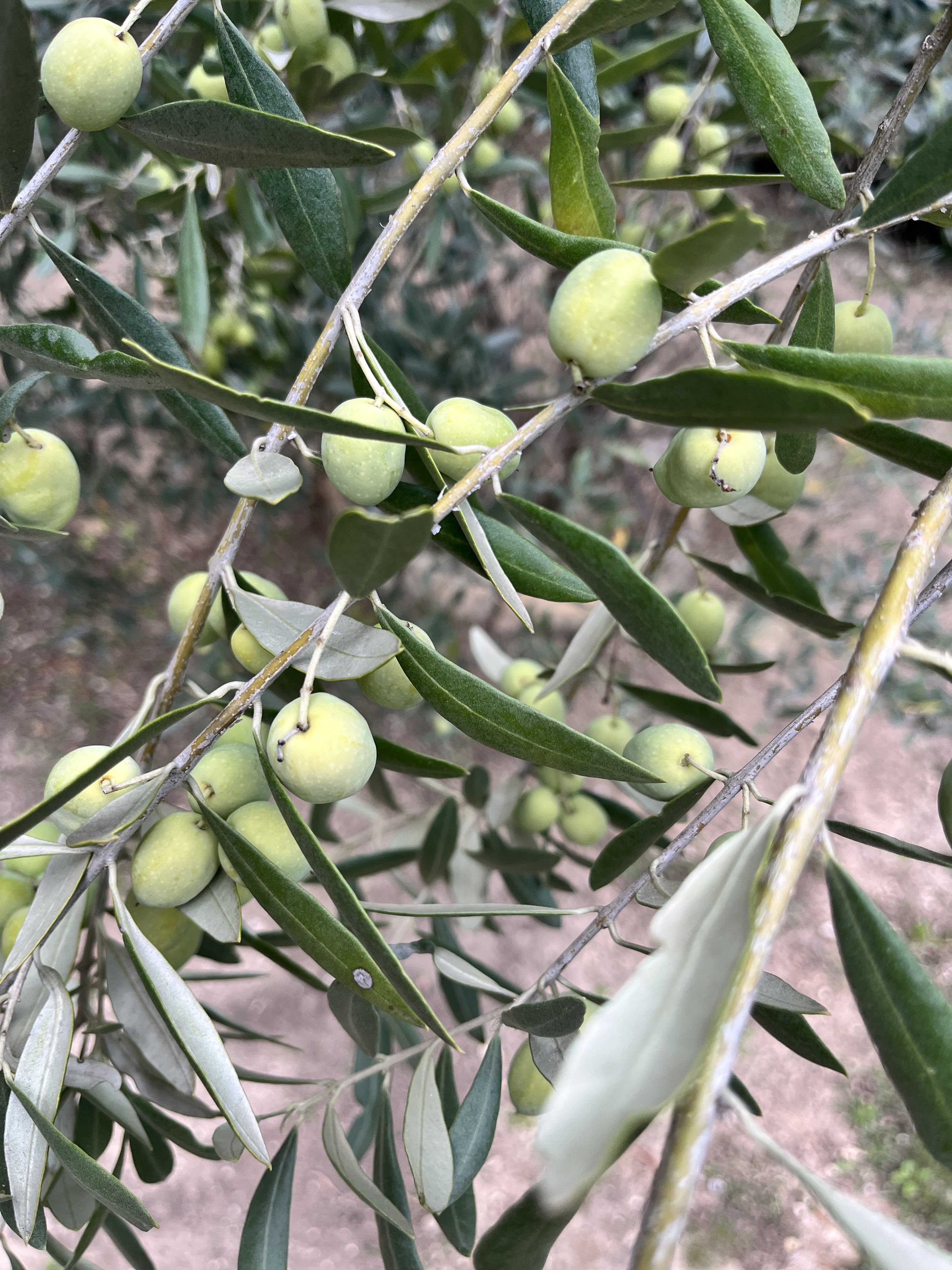
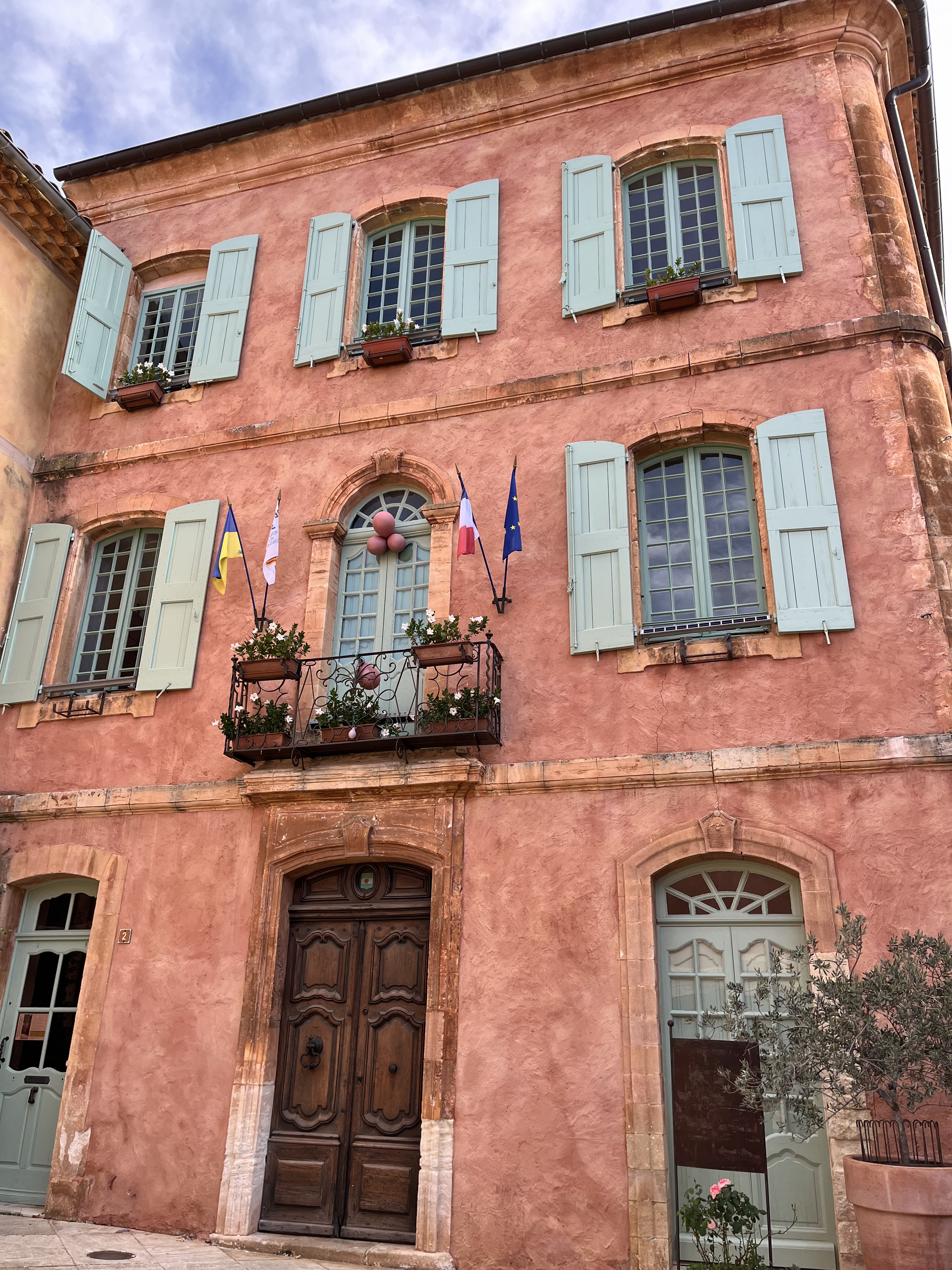
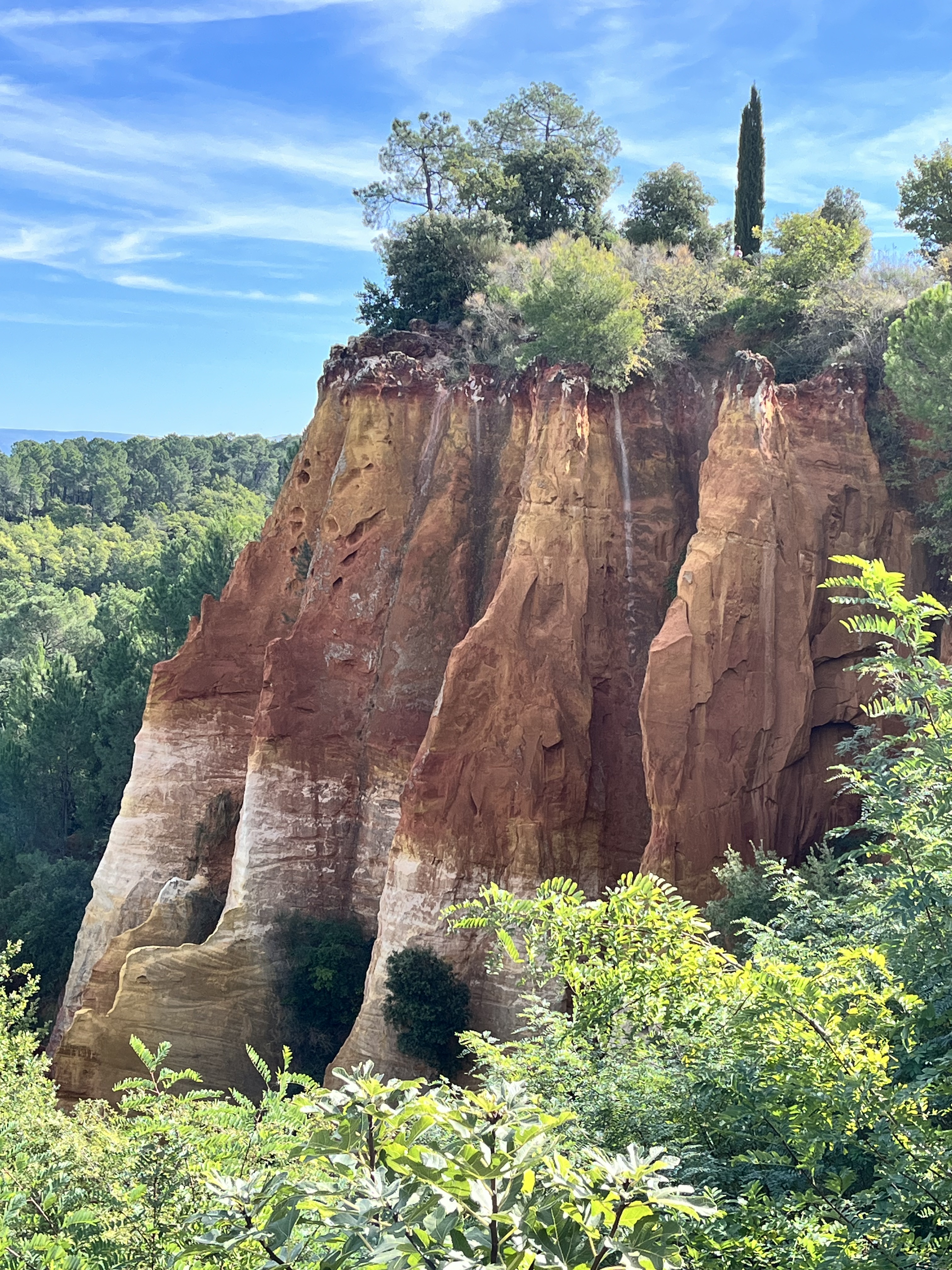
If Provence was a color, it would be a lush shade of green. On my trip, I saw green everywhere—the green of the olives and the leaves in olive trees, fern green, celadon, the basil that I picked in a garden, sage, mint green, the various shades of green in the fields—green was the color that beckoned me in France. It was on the hillsides of Gordes and Roussillon, in the clothing, in the lovely linen napkins that were a gift from a new friend. I love nature, particularly trees, and I felt like I was immersed in green while I was there.

I recently returned from a couple weeks in Provence and it was an incredible trip. For the first part of my journey, I was with a small group of women, all open to learning more about how to find more joie (joy) in life. Through strolls around villages, shopping in open air markets for antiques, food, art, and other goods, shared meals at the table, and moments of quiet awe and joy, we had the opportunity to learn more about the region, meet people, and consider what joy meant for us. 

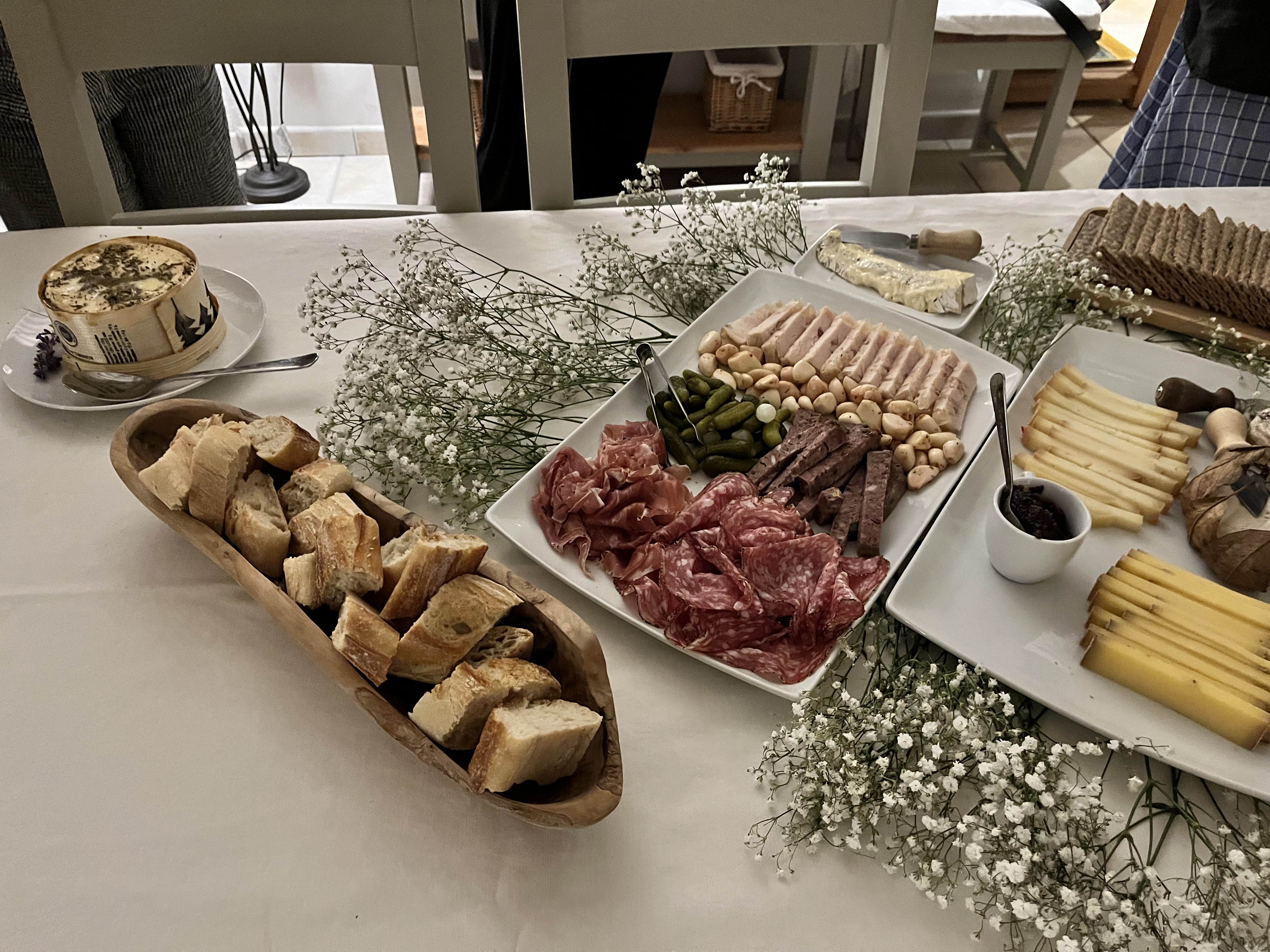
From the welcome toast and apero at our villa, to the goodbye dinner on our last night together, the retreat was the right balance of time immersed in various day trips and time spent alone to reflect on what I was experiencing. I learned about the delight of apero, which is a light meal in the late afternoon or before dinner where you take a pause, enjoy a beverage and fare such as olives, nuts, crackers, vegetables, maybe cured meats. The menu is simple; it is really about community and sharing. 

I went to Provence with an open mind; I wanted to be surprised and not locked into any particular outcome. I had been to Nice and knew I loved the region, but I prayed before leaving that I would be open to receive whatever was there for me. We were encouraged to reflect on what we experienced that was meaningful for us while we were there, and also to consider what we might want to take back with us, such as a new practice, an old one reimagined, or a different mindset. 

Each day held a surprise; we spent one morning at Isle-sur-la-Sorgue, which has the largest antiques market outside of Paris. I saw everything including furniture, copper pots, vintage linens, silverware, plates, clothing, along with fresh vegetables that were displayed like an art installation. Another day, we visited Loumarin where we had a unique cooking experience. The couple who were our hosts graciously provided a menu, detailed recipes, and taught us how to prepare the meal. The table setting alone was exquisite. I loved preparing the meal, but my time in their garden, picking the basil that would be used in our lunch, was meditation for me. I could feel my body shed any stress or concerns that I brought with me; one person said that I was “in the zone.” That kind of peaceful, quiet attention to a simple task is one thing I want to have more of in my life. It gave me not only peace, but joie.

I want to thank Ajiri Aki for her meticulous planning so that we could have such an amazing time. Her vision of what it means to have to a good life is transformative and allows space for people to discern what a good life, one filled with joie, looks like for them. She has written a wonderful book called JOIE: A Parisian’s Guide to Celebrating the Good Life, which is how I first learned more about her. She is on Instagram and Substack and I enjoy her pieces because of her creativity and willingness to share insights on how to enjoy a good life.

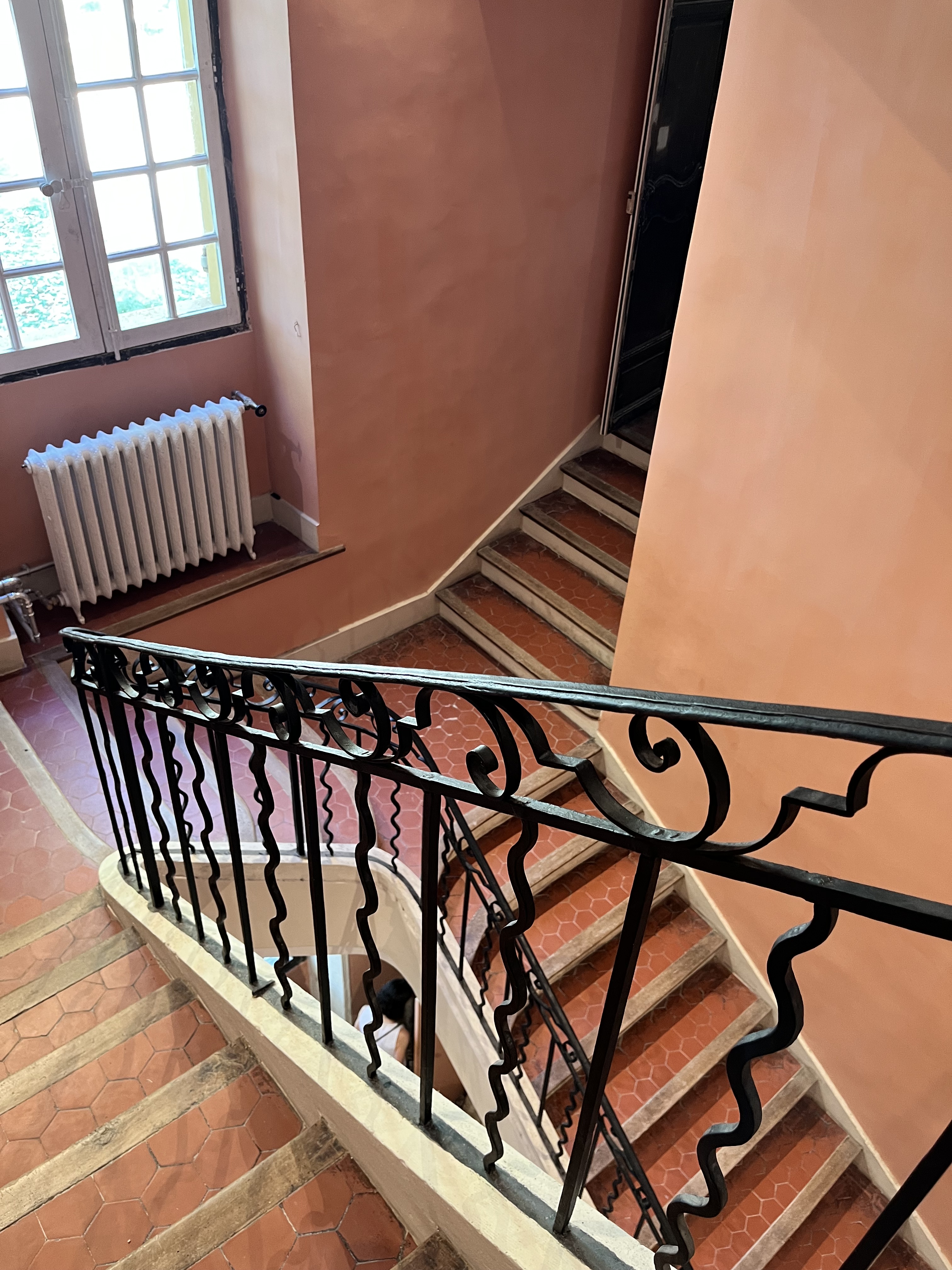
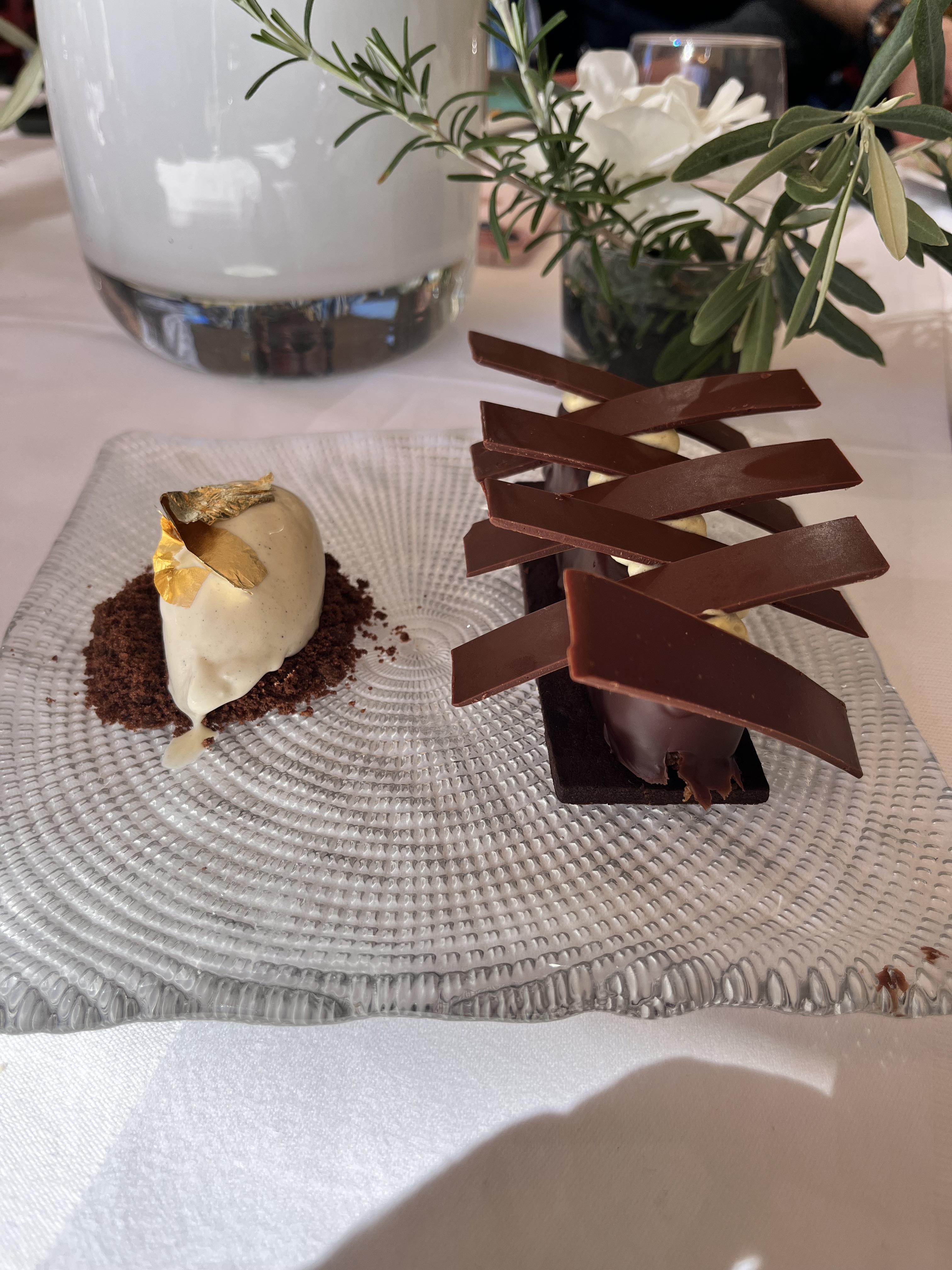
For the second part of the trip my husband met me in Aix-en-Provence where we enjoyed strolling Cours Mirabeau, an avenue that was created in the 1650s as a route for carriages. We visited the numerous shops on the side streets, always saying a pleasant “Bonjour” upon entering. This year Aix is celebrating Cezanne 2025 in honor of Paul Cezanne, the French artist, and we were able to visit Bastide du Jas de Bouffan, his family home and garden, for a guided tour that included an explanation of the history of the home and its role in Cezanne’s life. There were more delicious meals in cafes, shopping for gifts to take back home, and winding down in the evening, a glass of rosé for him and something sparkling but no-alcohol for me. And of course, there was chocolate!

These pictures are but a glimpse of the beauty of Provence, but here are some others:

I have always been drawn to France for reasons I no longer try to unravel. I often joke that it is because my people are from Paris, but that’s Paris in Kentucky, so that cannot be the real reason. I think it’s because my experiences there have always been so enlightening and inspiring. I have found the people to be nice and appreciative of my efforts to use their language as best I can. I like the pace of Provence; it’s somewhat slower than Paris. People are clearly engaged with each other, but the volume of conversation and life in general is set at a much lower range than here at home; I like that too. The architecture and the landscape are truly beautiful.

I love a set table, using cloth napkins, and nice plates, etc., but after this trip, I want to slow down when it comes to preparing and enjoying my meals. I hope to take more walks, because I walked every day there. Admittedly the weather was gorgeous, but walking seemed to be the most efficient way to get around in the smaller villages, and I savored the walks on narrow streets without cars racing by at 50 miles an hour. The owners in the market stands were patient enough to talk about what they sold, where it came from, and how things were made. I am certain this can happen here at home, maybe it is more about me slowing down enough to inquire. 

When will I return? I don’t have a date yet, but I know that I will go again. The next time I hope to travel with more of my family; they were as entranced by the photos and descriptions as I was by the experience, so they want to come along. I am grateful for this period in life, what I am calling my calm season, because I have the time and resources to travel in a way that I couldn’t for a while. Beauty and joy can be found in the simplest rituals and places, and it need not be expensive. 

With Joy!

Ramona

Quiet Time

I am just back from a week in New Hampshire with family and now I enter the quieter portion of the summer. The weather was great, sunny days with the kind of humidity that seems mild since I grew up in Cincinnati. We baked make-your-own pizzas in the backyard, visited Klemm’s Bakery for pastries, Hayward’s Homemade Ice Cream twice, and drove up to Cape Elizabeth, Maine for seafood and a stop at a nearby lighthouse. Being together was the best part, and I shared photos with those who could not join us. The only hiccups were flight delays, supposedly caused by “fog” in Boston. When I checked with my family in the area and spoke with a woman waiting for her daughter, everyone said there was no fog on a sunny midafternoon that they could see, but I knew the plane would leave when they said it could, so I read while waiting. I’m currently reading “How Beautiful We Were” by Imbolo Mbue, a novel about how a village in Africa is affected by the American oil company that started production and left the people and their land ravaged by illness and neglect. They resist for years, fighting to restore their homeland. I have not finished it, but there are passages so beautifully written that at times I need to put the novel down and just absorb the language and message.

I meant to write about letter writing, which many of us don’t do as much because it has been replaced with the quick text or social media update. I love writing notes and often will send a card with a letter or an article to folks, just to let them know that I am thinking of them. I don’t always get a letter back, but that is not the point for me—I love the slowing down that letter writing requires.

Last week, I did get some sad news—a friend and mentor, Ellen Doyle, OSU, passed away after living with an illness that she had been dealing with for over two years. Ellen often updated her friends, letting us know of her travels, treatments options, and speaking candidly about the gravity of her illness. I was surprised when I got word of her passing, but she had been letting us walk with her all along, preparing us for what she knew could happen.

Ellen wrote a wonderful memoir, “Dear Uncle Stanley”, which shares letters her uncle wrote during her young adulthood; she also wrote to him over those years. She was discerning and coming to understand her call to spiritual life as a sister in a religious community, and he was an older priest, speaking honestly with her about life and its challenges. I appreciated her love of letter writing and how letters are not just welcome in the moment, they also serve as a record of a moment in time. Mbue’s novel also uses letters between those in the village and a friend in the States to move the story along. There are many epistolary novels and memoirs, and I love how a letter can give an intimate portrayal of a person’s mind and heart. Ellen lived a rich and full life, and I know her spirit is at rest. That doesn’t mean I won’t miss her, but I am grateful to have known her for over 50 years.

In this quieter season, I will make a point to send a card or a letter to more people. It is more permanent than a text, even if the recipient does not hold on to it for decades like Ellen did. It is a way of checking in, letting those we care about know we are thinking of them.

This morning in my Pilates session, my trainer asked me if I was retired. I said, “No, not really; I’ll always have a project here and there.” Last week I said yes to an offer to facilitate a panel discussion, and I am in the planning stages for a few other projects that I will share as they are more fully developed. I appreciate this quieter season. I can be still long enough to let the ideas settle, like a butterfly on the coneflowers outside my window. If you are able, carve out some quiet time for yourself, whether it is a few hours or a few weeks. If we get still enough, if we are comfortable with the quiet, we can hear. And if you can hear, you can dream.

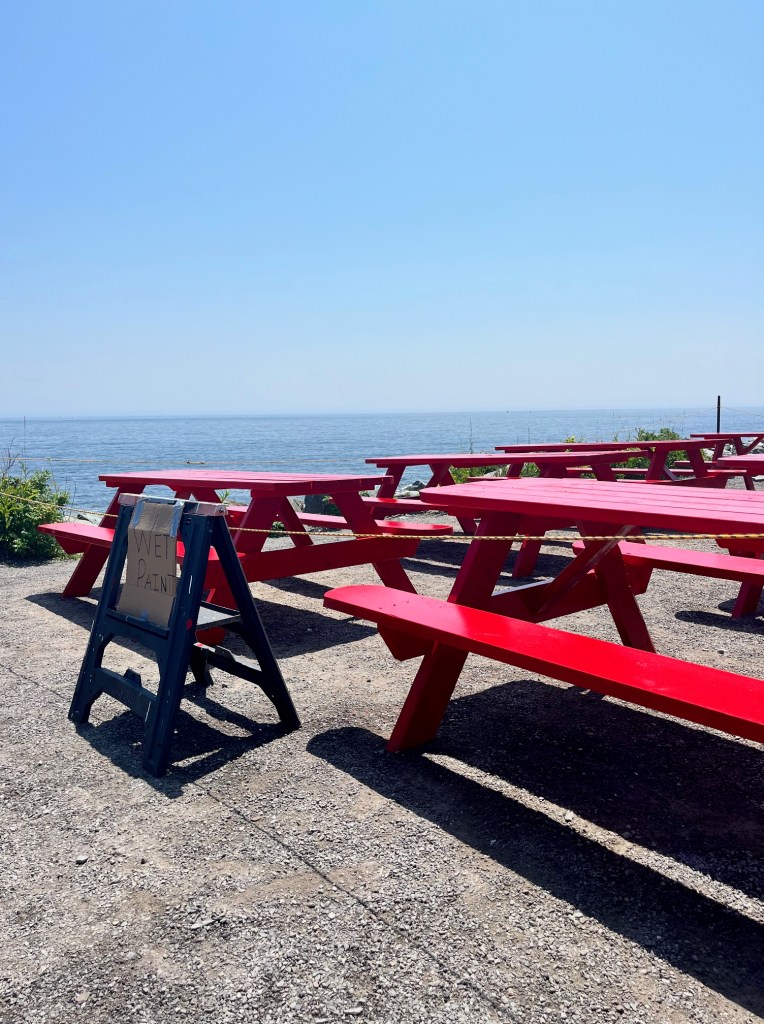
Cape Elizabeth, Maine

O-o-h Child

This is not the time to put a spin on it, today feels a bit heavy because of the rising strife in this country. There is no need for me to count all the ways we are not getting along, you probably have your own list.

While I was driving in the car earlier this afternoon, a song came on and I immediately was taken back to my early teens, summer camp, and a sense that the world could and would be a better place; it would just take some time. One of the songs on the radio that summer was O-o-h Child by the Five Stairsteps, and if you are of a certain age, especially if you are Black, you remember the words:

O-o-h Child, things are gonna get easier, O-o-h child things’ll get brighter. 

Hearing this song reminded me that no matter what is going on — assaults on peaceful protests, a seeming lack of compassion for those who have the least but are expected to give up the most, growing tension in communities that used to be able to coexist — things can seem dire but we don’t give up hope. We remain or get engaged, living out our faith and activism in ways that are consistent with our beliefs and access to resources.

I’ll be at a conference this week, joining writers from across the globe. Peeking at the panel topics, I sense that activism and how to use one’s voice as a writer will be a huge part of our discussions as we gather. In the meantime, here is that song that I learned so many decades ago.

Video of O-o-h Child, sung by The Five Stairsteps. (Press “skip ads” if one pops up, it was not present when I listened to the song.)

May it give you a bit of hope in the middle of the storm.

Ramona

What I learned at Biscuits and Banjos

Spring is here and I am finally getting out more, traveling. In April, I went down to Durham for the first Biscuits and Banjos Festival, hosted by Rhiannon Giddens. When I heard about it last year I was all in—I have been a fan of Giddens since I saw her years ago with the Carolina Chocolate Drops. Rhiannon Giddens is a GRAMMY Award-winning singer, plays numerous instruments, including the banjo and fiddle, has earned the MacArthur “Genius” grant and a Pulitzer Prize. I was also eager to get back to Durham since I have only been back for business a few times since living there while I earned my MBA at Duke, which was decades ago.

Biscuits and Banjos was about more than food and music, although we did eat our fair share of biscuits while we were there. This was a celebration and education on the influence and importance of Black culture on the culinary and music traditions in this country, which include the banjo, blues, country, jazz, and gospel. There were panel discussions, performances, and a chance to talk with some distinguished and interesting speakers. The festival brought together performers from as near as North Carolina and as far as the Democratic Republic of the Congo.

I appreciate how much I learn from other creatives and usually come away from these live performances with a new respect for what it takes to pursue art of any kind. Christian McBride, a bassist, performed with the student jazz ensemble from North Carolina Central University. The students were a bit nervous at first, but I will not forget the light in their eyes when they settled in and played alongside an accomplished musician; it was something to see. When I witnessed the power and energy of the Legendary Ingramettes, a gospel group that has been at it for over 60 years, I took heart in knowing that it is never too late, I just need to do the work that is before me.

I am aware that many are watching their expenses in ways they may not be accustomed to, given the political and economic climate we are in. But I would rather give up spending in other areas, and now that I have the time, I want to immerse myself in live musical performances as much as possible. There are also numerous free concerts, especially in the summer. I seldom come away wishing I had not spent the time and money, and often leave inspired not just to create, but to act, get involved, share my voice. This is part of the power of the arts—it can rally us to get busy in ways speeches and social media cannot. 

Rhiannon Giddens and the Legendary Ingramettes

Giddens, the Carolina Chocolate Drops, and the entire host of musicians take the stage at the Durham Performing Arts Center.

Resting in Winter

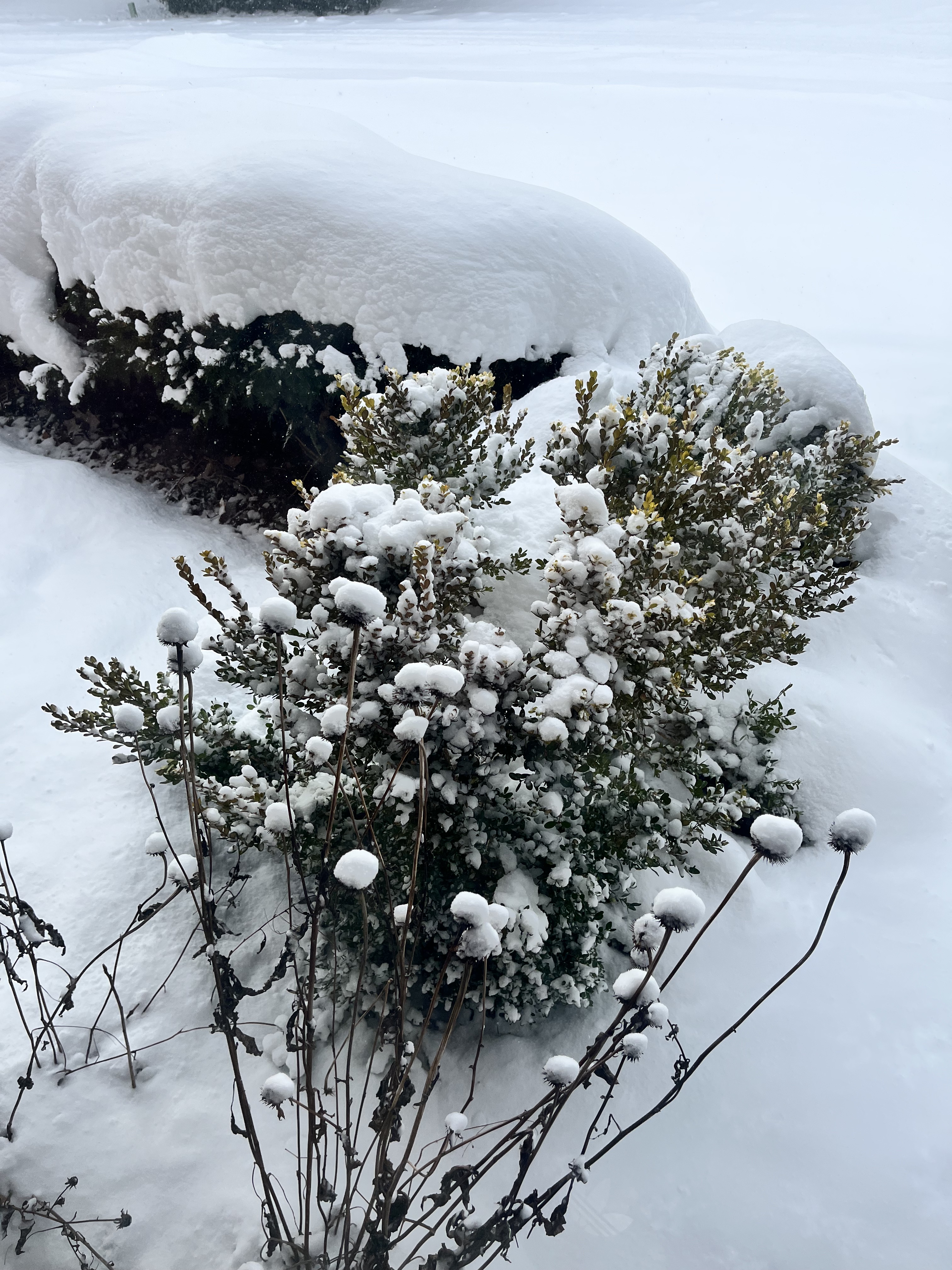
This morning is a cold one and usually I might complain. But this year I am reminding myself, again, that the coming winter and its colder temperatures with less daylight serve a vital purpose for nature and for me. One purpose is the same, it is a time to rest and rebuild.

Every year about this time a group of black birds settle in South Bend for a week or so, although some days it seems longer because of all of their cawing and screeching. I remember the first time that I noticed the ravens. I was sitting on the couch in my living room, talking to a friend on the phone. A landline, albeit cordless. I looked outside and saw dozens of birds settled in the intersection outside my window, in the street, and pecking at the ground. It was a bit terrifying because there were so many of them, and it reminded me of the scenes from the Hitchcock movie The Birds, where they descended on a town and started attacking people. However, maybe this area is just part of their migration path because they don’t stay long. For them, passing through town, likely led by the winding St. Joe River, is innate and part of an annual ritual.

For years I would bemoan the approach of winter, fretting over the cold and lack of sunshine, and I almost felt forced to stay inside. Two things helped me to change my mindset. The first was my growing love for gardening. Once I saw the winter as a respite for nature and an opportunity for the world above ground to be silent while my perennials preserved energy, I accepted that winter’s cold was part of the process and I could relish what was quietly happening underneath the frozen soil. I would look at the bare trees and think, “just resting, they will be back.”

Another purpose of this season was revealed at a winter retreat I went on in early 2018. I was going through a hard time, kind of low, and the gloomy days did not help. What I did was counterintuitive – instead of heading to a tropical beach, I went to the Berkshires for a week of winter hikes, workshops, and rest. I learned how to identify the tracks of animals moving about in the snow and realized that I did not have to shut myself in because it was cold, I just need to dress for it.

Our home is nearly decorated for Christmas, with lots of reds and greens, Nativity scenes, trees of varying sizes, Grinch decorations, and lights, so many lights and candles. This year has been such a busy one and it is time for me to slow down and enjoy this season. There will be some holiday gatherings, but I am also leaving time to write, sew (now that I finally got a new machine) and learn how to sit still without cooking up the next project. One of my brothers once teased that me and another brother are “always looking for something to do.” That quality has served me well but in this season, I am going to hush the small voice that tells me I could get one more thing done, that the goal is constant productivity and doing. It is not always easy, but I am learning. 

In a few weeks I will share some of my favorite reads of this year, but here is one that might help others who struggle with winter. The book is How to Winter by Kari Leibowitz. In the meantime, I hope you can enjoy some of the stillness that comes with this time of year.

Peace,

Ramona

Having Space Finding Freedom

I don’t believe in writer’s block but I do understand what it feels like to be stuck, looking for the right words when maybe any words will do. I shared over a year ago that I have been working on longer pieces that don’t lend themselves as readily to this newsletter, which was part of the reason I had not been sending as much out or with the same frequency that I used to. 

However, there is more to it than that. I started this year off with the concept of wanting more space in my life. After many years of working hard, six and sometimes seven days a week, I wanted to schedule less, reflect and rest more. But that did not happen, or at least I could not stick with that plan. In June, I wrote about learning to be present with my father as he was beginning the process of transitioning. Two days after my post, he passed on. I was with him that morning and when I got the call a few hours later, I rushed back, quickly going into the responsible mode that is familiar and second nature for me. In the hours, days, and weeks that followed, we all had a lot to take care of, and I cannot completely remember who I spoke to and when. His homegoing was a celebration of his life and I am blessed to have had such a wonderful father. I take comfort that he is at rest, and that he can be reunited with my mother—he missed her so much over these last seven years.

Where does this leave me? In some ways with more space than I have had in a long time. Some of that space is free time, and some is the hole that is there from missing my father and mother. I have wonderful memories, stories, and great family and friends, which helps a lot. And I don’t have many regrets about how I have used my time. 

These days I am trying to develop a new rhythm and routines, and resume old ones that were cast aside because of work, caregiving, fatigue, and other commitments. A last-minute train ride to Chicago with my husband. Pilates classes with different instructors. Coffees with friends who haven’t seen me as much over the last few years. Homemade soups. Reading – on my own or when I can, with an online community that talks about what is going on in our lives as much as it discusses the actual books. And rest, even though sometimes the sleep doesn’t come as quickly as I’d like. I relish my rest. 

Which brings me to my writing. Writing has always been a comfort to me, and usually comes easily. I think I worry too much about getting it right when what is most important is that I get the words down. The bigger project is going to take time, will require revision, and I will get it done, in time. But what I like about this format is its immediacy—if I have things I want to share (and write them down before I forget and get caught up in another task), getting my thoughts out in the world is not hard. I want to thank those of you who have stuck with me and I especially appreciate those who prod me when it has been too long since they have heard from me and ask about my writing. I am learning how to navigate a life that still requires structure and routine, and enjoy the space I have to create a life that works for who I am now.

Let’s Start with Lotion

Know this about Black women—we are going to take care of our skin, moisturize, soothe, and protect it. This may be accomplished with a number of products, but from the time we are first in our loved ones’ arms, they are going to tend to any semblance of dry, flaky skin. What we use to accomplish this can vary, from Vaseline, jojoba oil, cocoa butter, to drugstore lotion. As we get older, or have more disposable income, the brand names might change and the price may go up, but the point is, we will find a way to nourish our skin—it is taught from childhood. And to be honest, the men are not that different. Even my husband tells of how his mother would tell her three boys to go put on some lotion because they looked like they had been picking potatoes. My youngest brother is a devoted user of Jergens lotion, with its cherry almond scent that reminds me of the years when my father worked in the lab at The Andrew Jergens Company.

The last few years have been a strain on nearly everyone I know. We went into the COVID pandemic already stressed out because of the general disruption in the country, largely due to differences in values, politics, and policy. And the fact that these disagreements often tumbled into our work lives meant that issues which might have been reserved for at-home conversation and dissection were often factors on our jobs, in our schools, and in places of worship. So, the stress was already there. 

Many of us felt rushed in our days. Trying to get a bit more sleep, which we needed because we were already working what seemed like around the clock, meant that in the morning we hit snooze or lingered in bed, already feeling the pressure of what needed to be done that day within minutes of opening our eyes. Hurrying to the shower, or to the kitchen to make coffee and breakfast for one or many. Hurrying out the door, to school, to work, to daycare drop-off, to care give, to volunteer. Always in a hurry, rushing, racing. Lunch eaten not at a table with friends or coworkers, at least not most of time. Lunch grabbed and gobbled down, ultra-processed (who has time to cook anymore?), and way too often, at a desk, in a cubicle, or maybe in a cafeteria/restaurant. Not savored or enjoyed, it was eating to fill the belly, to sooth the stress, not always nutritious, then back to work, chores, obligations.

I remember many days when I looked up and it was 3 pm and I had not eaten since morning, if I had even eaten anything that morning, since I have never liked what constitutes the traditional American breakfast. No to coffee, pancakes, waffles, French toast, eggs, and bacon. No to donuts and most pastries, at least not in the morning because sweets in the morning make me queasy. Only when I started getting headaches did I realize that I was not doing myself any good by ignoring the need to eat something in the morning to give my body and brain the fuel it needed to run properly. 

Meals were not the only thing I rushed through so I could get to the more urgent matters of the day. I like to work out, but that takes time, and time was something that I primarily allocated to work. So, I might start a workout, like rowing, but feel like I needed to cut it short because after all, I had work to do. The hour-long Pilates sessions came to halt, and so did my flexibility and strength. But I persisted. 

COVID only seemed to amplify the need to keep things moving. Life momentarily slowed down in the first weeks of shutdown, at least outside of our homes. The ongoing hum of cars, the buzz of life inside stores, coffee shops, and restaurants—that slowed. With no place to go, at least in the beginning, we were forced to stay home, not a bad idea since we did not fully understand the consequences of mixing and mingling. Inside our homes, unless you lived alone, it became a bit more crowded, sometimes chaotic, if people did not have the space they needed to get work done with others around. And since commerce and education had to continue, companies found ways to work and communicate online, stressing the bandwidth of not just employees and students, but of our peace. 

The worst of that period is over, but I think it highlighted what we have been feeling for years. We are not just doing the most, we might be doing too much. Perhaps that is why many used the time to reflect on what they wanted their lives to look and feel like. Perhaps that is why some office employees continue to resist the return to the office. Once they learned how to work from home, and organized their spaces to accommodate the shift, they wanted to keep it that way. And if your job can be done anywhere, why leave home when you can work from home, a coffee shop, or across the country? Does it really matter for most of us if you take a chunk of time midday to go for a walk, paint, or nap, as long as you get the work done?

Not everyone had that option, of choosing when and where to work. And technology has not freed us from potentially working around the clock, not when a computer is tethered to most adults, whether it is in your back pocket, purse, or on your wrist. We really can be reached at any time, and I don’t think most of us want that, unless it is reserved for family and some friends.

In an effort to make the most of time, or I mean the same 24 hours a day we all have to live life, I rushed through some tasks, usually the ones most needed for my health, so that I could get to the ones that felt more urgent, like work. I had a conversation about how it was easy to let the demands of life get in the way of taking time to do things for myself that were important, such as self-care. I do not mean self-care as in a taking a bath. That works for some but let’s face it, I am going to take a shower or bathe regardless of my mood, so that never felt like pampering. Maybe you have to allow more time for it to feel like a luxury, but that wasn’t my thing. 

“I know this is going to sound crazy, but I was rushing around so much that I barely took time to put lotion on,” I said. I was a little embarrassed to admit this, but I was in a safe conversation with a Black woman who would understand what I was trying to say.

“I know, I get it,” she said.

“I’m not saying that I completely stopped, but just that it was more rushed, kind of hit and miss.” 

I added this so that I would not sound like I was completely neglectful, walking around dry and flaky, even ashy, under my pants or tights.

She had experienced the same feelings, that it was more important to get to the next task rather than taking time for herself. I felt completely understood. When you don’t have time to apply lotion, you need to take a hard look at what is going on.

It might seem like an insignificant step, but that is when I realized I could start with one simple thing to slow down as an act of self-care. I splurged on moisturizer, also keeping the oils and cream I grew up on. These days, after my shower or before bed, where I used to rush, I intentionally slow down. The ritual does not take an hour, it is surprisingly quicker than I thought, yet satisfying. I dip my fingers into the pot of whatever potion I want to use that day, rub it between my hands, and tell myself that I do not have to rush; I can take my time and and take care. I repeat the ritual shown to me by my mother and Black mothers before her. I apply my lotions, look to make sure there are no dry spots. I laugh as I remember the old Jergens commercial with the alligator, telling women that without lotion their skin would be rough and wrinkly. It is a simple routine, but the beginning of my attempt to slow down, minister to myself, and not rush to take care of other folks’ business before I tend to my own. 

A New Season

Summer might be almost over, and it is if you follow the meteorological calendar which has autumn beginning September 1. We’re past back to school season which always feels like a fresh start, at least for me. But this year is different. No longer working or employed for an organization, I am back to doing what is my first love – writing.

The word retirement – if that is what you choose to call leaving regular paid employment – doesn’t quite capture this phase of my life. I have full days, and wonder how I got so much done when I had to balance the professional, personal, and creative. I have enjoyed writing since I was at least six, and I remember the many stories I wrote and read, mainly about animals, during those first years of writing. Even while during corporate work, then nonprofit – arts, education, etc., the call back to writing never seemed to leave. So here I am, with the time and freedom to go back to the page. Last week I was part of a writing intensive, a good way to immerse myself in craft with a writing community. In between talks about writing, revising, and publishing, we also completed writing exercises, many of which will develop into complete essays.

Tending the garden (what I call yardwork), resuming my Pilates practice, having fun with family and friends, attending live performances (saw Bob James a week ago), are other ways I spend my time. And sometimes I do what appears like nothing, which is a big shift for me and something I need to almost talk myself into; I am so used to running full speed every day. But it’s all good. Like autumn, it is a good time to slow the pace, wrap up some of the old projects, and make sure everything is settled for the season I am about to enter. 

Mother’s Day 2023

I wrote this post several years ago, months before my mother passed away. I often think back to it when I remember what kind of mother she was, how she allowed me to grow into the person I am but also provided knowing guidance. I am in a period of transition, and I am grateful for her, and hope this will help those who are nurturing and guiding people they love, regardless of the label others might place on the relationship.

From 2017:

This is for mothers everywhere, and for those who have poured their love, patience, and wisdom into the life of another person, whether it is your own child or someone who needed a gift that you were able and willing to provide. Despite going to Catholic grade school and college, there was a verse in […]

Happy Mother’s Day – Treasures — Ramona M. Payne